Broth is the quiet can in the pantry. Nobody plans a supper around it, and half the suppers in a week pass through it: the rice, the gravy, the soup that uses up Sunday's chicken.
The Sweet Sue shelf has chicken broth in two can sizes and beef broth in one. This note covers what is in them, how far each can goes and what to cook with it. The second half is about the shelf itself: where cans live, what the dates mean and when a can should go in the trash.
Three cans of Sweet Sue broth
| Chicken Broth, 14.5 oz can | Chicken Broth, 49.5 oz can | Beef Broth, 14.5 oz can | |
|---|---|---|---|
| Net | 14.5 fl oz | 49.5 fl oz | 14.5 fl oz |
| Cups in a can | about 2 | about 6 | about 2 |
| Calories a cup | 5 | 5 | 10 |
| Protein a cup | 1 g | 1 g | 2 g |
| Sodium a cup | 870 mg | 870 mg | 1,080 mg |
| Contains line | Soy | Soy | Soy |
| Price | from $2.29 | from $3.32 | $9.00 |
| Lowest price per fluid ounce | 9¢ | 6¢ | 16¢ |
 Chicken Broth, 14.5 oz Canfrom $2.29 · 9¢/fl oz
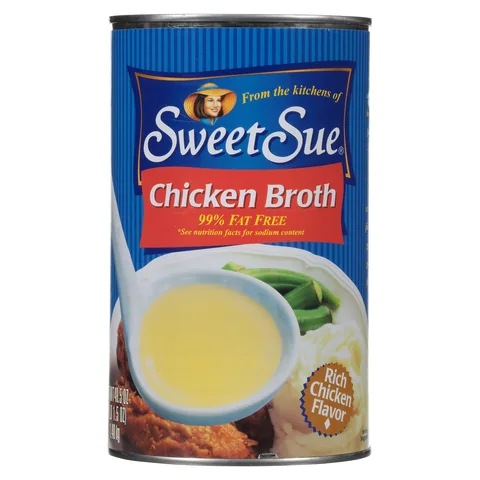 Chicken Broth, 49.5 oz Bulk Canfrom $3.32 · 6¢/fl oz
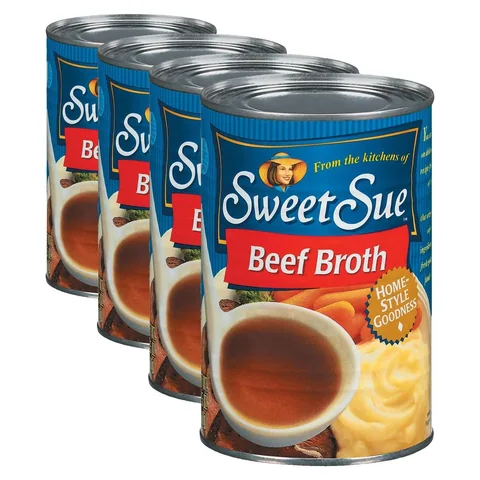 Beef Broth, 14.5 oz Can$9.00 · 16¢/fl oz
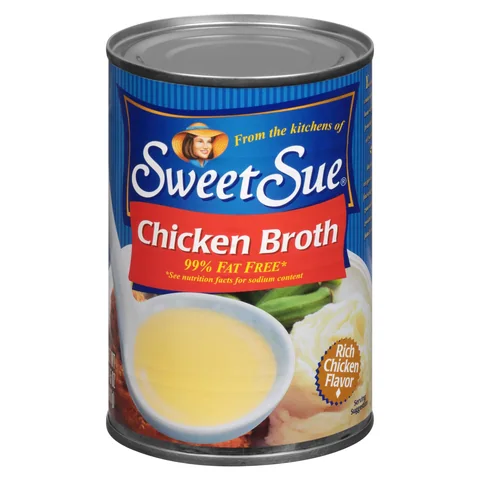
The chicken broth is the same recipe in both cans. The small can pours about 2 cups, which is what a pan of rice or a quick gravy takes. The bulk can pours about 6 cups, enough for a stockpot.
Beef broth comes only in the 14.5 oz can and is sold as a pack of 4. It is the newest broth in the range. The trademark record first names canned beef broth under the Sweet Sue mark in a registration dated January 2, 2007.
What is in the broth
The chicken broth label lists 13 ingredients. The first is chicken broth itself, made of water and chicken broth concentrate. Salt comes second, and the label caps it at 2% or less.
| Calories | 5 |
|---|---|
| Total fat | 0 g |
| Saturated fat | 0 g |
| Cholesterol | 0 mg |
| Sodium | 870 mg 38% DV |
| Total carbohydrate | 0 g |
| Dietary fiber | 0 g |
| Total sugars | 0 g |
| Protein | 1 g |
| Calories | 10 |
|---|---|
| Total fat | 0 g |
| Saturated fat | 0 g |
| Cholesterol | 0 mg |
| Sodium | 1,080 mg 45% DV |
| Total carbohydrate | 0 g |
| Protein | 2 g |
The seasoning follows: monosodium glutamate, sugar, chicken fat, yeast extract, onion powder, hydrolyzed soy protein, natural flavor and spice extractives. Caramel color and beta carotene give the broth its gold. Silicon dioxide is an anti-caking agent.
Two items on that list matter to particular cooks. Monosodium glutamate is named outright, third on the label. Hydrolyzed soy protein is why the Contains line reads soy.
The beef broth is a shorter recipe of 7 ingredients: water, hydrolyzed soy protein, salt, dried beef stock, beef flavor (beef fat, flavoring, gum arabic), disodium inosinate and disodium guanylate, caramel coloring. It also contains soy. Its panel counts the cup by weight, 225 g, where the chicken broth counts 240 mL.
The major food allergens are milk, eggs, fish, Crustacean shellfish, tree nuts, peanuts, wheat, soybeans, and sesame.
Soybeans are on that list, so all three broths call for a second look when a guest has a soy allergy. Read the Contains line on the can in your hand before the broth goes into a dish for someone else.
What the front of the can says
The front of the chicken broth can reads 99% fat free, and the panel backs it with 0 g of fat in a cup. The product details mark the chicken broth gluten free. Those are the label's words, and they describe the broth and not the dish you make with it.
Broth, stock and bouillon
Grocery shelves carry three things with similar names, and recipes use the words loosely. Broth is seasoned and ready to use as it comes. Stock is usually sold with little or no salt and is meant as a base the cook seasons. Bouillon is a dry cube, powder or paste that is dissolved in hot water.
Chicken Broth, 14.5 oz Canfrom $2.29 · 9¢/fl ozChicken Broth, 49.5 oz Bulk Canfrom $3.32 · 6¢/fl ozBeef Broth, 14.5 oz Can$9.00 · 16¢/fl ozThe Sweet Sue cans hold broth. It arrives salted and flavored, so it can go straight into a mug or a pot. When a recipe written for unsalted stock meets a can of seasoned broth, the fix is simple: leave out the salt the recipe lists and taste at the end.
A can of broth and a bouillon cube should not share a pot. Each is seasoned to stand alone, and together they double the salt. If a soup needs more depth, reach for onion, celery, a bay leaf or a longer simmer.
Sodium: the number that matters in broth
Broth has almost no calories, fat or protein. What it brings to a pot is flavor and salt, and the salt is printed on the can.
Chicken Broth, 49.5 oz Bulk Canfrom $3.32 · 6¢/fl ozBeef Broth, 14.5 oz Can$9.00 · 16¢/fl ozChicken Broth, 14.5 oz Canfrom $2.29 · 9¢/fl ozA cup of the chicken broth carries 870 mg of sodium, which the panel counts as 38% of the Daily Value. The small can prints a second column for the whole can: 1,490 mg, or 65%. A cup of the beef broth carries 1,080 mg, or 45%.
The Daily Value for sodium is less than 2,300 milligrams (mg) per day.
5% DV or less of sodium per serving is considered low, and 20% DV or more of sodium per serving is considered high.
By that guide every cup of these broths counts as high in sodium. That is normal for regular canned broth, and it shapes how a careful cook uses it.
Nobody drinks broth by the cup in a recipe, of course. Two cups of broth cooked into rice for four people divide into half a cup a plate. The label number is the start of the arithmetic and not the end.
Cooking with a salty broth
- Add the broth first and the salt last. Taste after the dish has simmered.
- Cut the broth with water, one part to one, for rice and for long-simmered soups that reduce.
- Skip other salty additions such as bouillon cubes or soy sauce when the liquid is canned broth.
- Use unsalted butter and plain vegetables around it.
What to cook with each can
Chicken broth is the all-purpose liquid of an American kitchen. Beef broth is the specialist. Buyers of the Sweet Sue chicken broth mention noodles, homemade soup and sipping it warm from a mug.
| Dish | Broth needed | What to open |
|---|---|---|
| Rice or noodles for 4 | 2 cups | One 14.5 oz can of chicken broth |
| Pan gravy | 1 cup | Half a 14.5 oz can |
| Quick chicken noodle soup for 4 | 4 cups | Two 14.5 oz cans, or part of a bulk can |
| A stockpot of soup for 8 | About 6 cups | One 49.5 oz bulk can |
| Holiday dressing | 3 to 4 cups | Most of a 49.5 oz bulk can |
| Beef stew or pot roast | 2 cups | One 14.5 oz can of beef broth |
| Vegetable beef soup | 4 cups | Two 14.5 oz cans of beef broth |
A ten-minute chicken soup
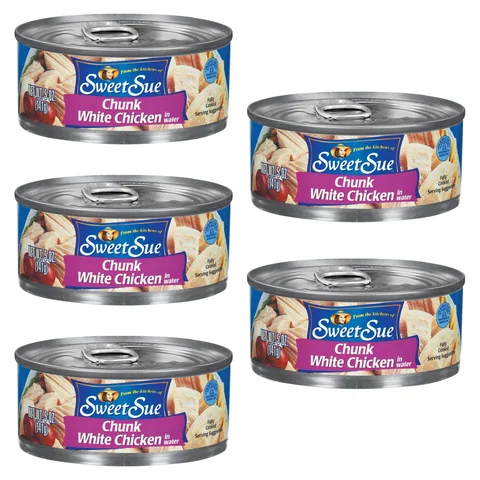
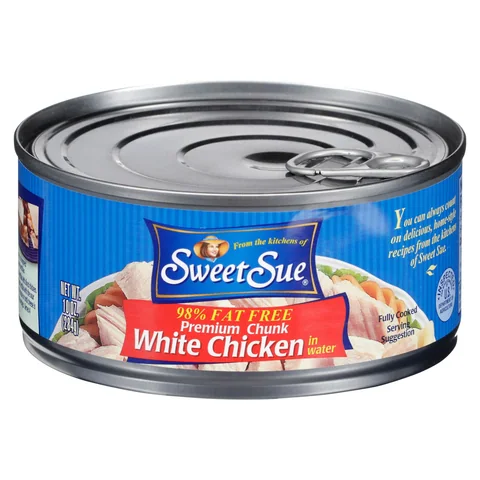
Buyers call this the quick fix. Bring one 14.5 oz can of chicken broth and 1 cup of water to a simmer. Add a handful of egg noodles and a sliced carrot, and cook until the noodles are soft. Stir in a drained Chicken Breast in Water, 10 oz Can for the last 2 minutes. Finish with black pepper and parsley.
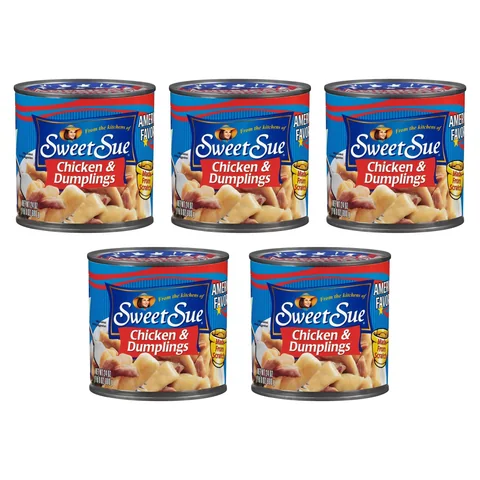
For a bigger pot, the Boneless Chicken with Broth, 50 oz Can brings its own broth along with the meat. And when a can of Chicken & Dumplings, 24 oz Can thickens on the stove, half a cup of chicken broth loosens it without thinning the flavor.
Beef broth on stew night
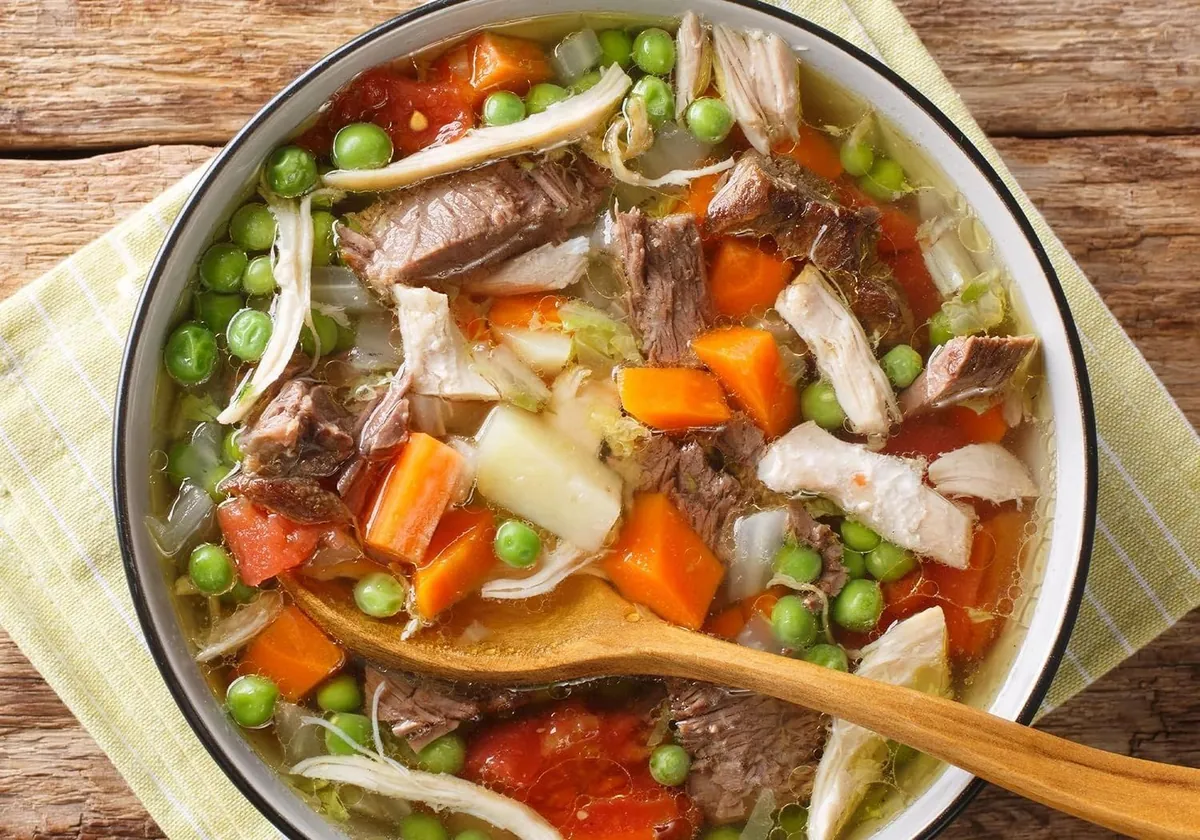
Beef broth earns its place in dishes that cook low and slow. Brown the meat, pour in a can to lift the browned bits from the pot, and let the stew do the rest. It also deepens onion soup, pot roast gravy and a pan of rice served with beef.
- 14.5 oz canSee the Price on Amazon
- 49.5 oz canSee the Price on Amazon
- 14.5 oz canSee the Price on Amazon
- 10 oz canSee the Price on Amazon
Rice cooked in broth
Rice is the easiest place to see what broth does. Use the same amount of liquid the rice package asks for, and replace half or all of the water with chicken broth. For 1 cup of long-grain rice that is usually 2 cups of liquid, which is one small can topped up with a splash of water.
Leave out the salt the package suggests. The broth has already seasoned the pot. A spoon of butter and some black pepper at the end is all it needs.
Gravy from a can of broth
Beef Broth, 14.5 oz Can$9.00 · 16¢/fl ozChicken Broth, 14.5 oz Canfrom $2.29 · 9¢/fl ozChicken Broth, 49.5 oz Bulk Canfrom $3.32 · 6¢/fl oz- 1
Make a roux
Melt 2 tablespoons of butter in a saucepan and whisk in 2 tablespoons of flour. Cook for 1 minute, until it smells toasty.
- 2
Add the broth slowly
Pour in 1 cup of broth a little at a time, whisking after each addition so no lumps form.
- 3
Simmer and taste
Let it bubble gently for 3 to 4 minutes until it coats a spoon. Add pepper. It rarely needs salt.
Chicken broth makes the pale gravy for biscuits, mashed potatoes and chicken-fried steak. Beef broth makes the brown one for pot roast and meatloaf. The method is the same, and the flour adds wheat to a dish that had none.
Broth as a braising liquid
Vegetables cooked in broth take on more flavor than vegetables cooked in water. Simmer green beans, cabbage or collard greens in a cup of chicken broth with a sliced onion. Because the broth is salted, the usual ham hock or bouillon cube can stay out of the pot.
Chicken Broth, 14.5 oz Canfrom $2.29 · 9¢/fl ozChicken Broth, 49.5 oz Bulk Canfrom $3.32 · 6¢/fl ozBeef Broth, 14.5 oz Can$9.00 · 16¢/fl ozSmall can or bulk can
| 14.5 oz can | 49.5 oz bulk can | |
|---|---|---|
| Cups | about 2 | about 6 |
| Price | from $2.29 | from $3.32 |
| Lowest price per fluid ounce | 9¢, pack of 24 | 6¢, pack of 2 |
| Packs on the shelf | 1 can and 24 cans | 1 can and 2 cans |
| Left over after one recipe | Usually nothing | Often 2 to 4 cups |
| Better choice when | A recipe asks for one or two cups | The pot takes more than a quart, or you cook several dishes in a few days |
A buyer of the small can notes that it is small next to the resealable cartons in a grocery aisle. That is the trade. A can keeps for years unopened and takes little room, and a carton pours and closes. The bulk can gives the low price and asks you to use it within days.
Leftover broth freezes well. Pour it into an ice cube tray, and each cube is about 2 tablespoons for a pan sauce. Or freeze it flat in a zip bag in 1 cup portions.
What each pack costs
| Pack | Total | Price | Per fluid ounce | Per cup |
|---|---|---|---|---|
| Chicken Broth, 14.5 oz can, single can | 14.5 fl oz | $2.29 | 16¢ | $1.15 |
| Chicken Broth, 14.5 oz can, pack of 24 | 348 fl oz | $30.43 | 9¢ | 63¢ |
| Chicken Broth, 49.5 oz can, single can | 49.5 fl oz | $3.32 | 7¢ | 55¢ |
| Chicken Broth, 49.5 oz can, pack of 2 | 99 fl oz | $6.32 | 6¢ | 53¢ |
| Beef Broth, 14.5 oz can, pack of 4 | 58 fl oz | $9.00 | 16¢ | $1.13 |
The lowest price per fluid ounce today is 6¢ for Chicken Broth, 49.5 oz can, pack of 2. Buyers of the chicken broth praise the flavor and wish the price were lower, so the per-cup column is worth a glance before a case goes in the cart.
Sweet Sue chicken broth holds 4.4 out of 5 from 56 ratings across both can sizes. The praise is for taste. The complaints are about price and about cans that arrived dented.
The pantry shelf: where cans live
A can is one of the most forgiving foods to store, and it still has preferences. Heat is the enemy. So are damp floors, which rust the rims.
The ideal location is a cool, dry, dark place. The best temperature is 40°F (4°C) to 70°F (21°C).
In a house that means an interior cupboard or a basement shelf. It does not mean the cabinet over the stove, the top of the refrigerator or a garage that reaches 100 degrees in August.
- 1
First in, first out
Put new cans behind the old ones. The can in front is always the next to use.
- 2
Date the lid
Write the month you bought it on the lid with a marker. Printed codes are hard to read in a dim pantry.
- 3
Look twice a year
Pull everything forward when the clocks change. Check rims for rust and bodies for dents.
What the date on a can means
Most people read the stamp on a can as an expiration date. USDA describes it differently.
Except for infant formula, dates are not an indicator of the product’s safety and are not required by Federal law.
The date tells how long the food should stay at its best. Past it, flavor and texture may fade slowly. Safety depends on the can staying sealed and sound.
Whereas low-acid canned foods (e.g., meats and vegetables) will keep for two to five years.
Broth, canned chicken and chicken and dumplings are all low-acid foods, so they belong to the longer group. Some cans carry a string of letters and numbers and no calendar date at all.
The codes are not meant for the consumer to interpret as a "Best if Used By" date.
Dents, rust and swelling
Buyers who order broth by the case mention dents more than anything else. One was relieved that all 24 cans arrived perfect. Another found two cans dented at the rim, right where the opener needs to bite.
Follow proper handling of canned foods and discard cans that are dented, rusted or swollen.
That sentence is USDA's whole rule, and it is short on purpose. A can is a sealed system, and a dent on a seam or a rim can break the seal without any visible leak. A swollen can is a firm no.
When a case arrives with dented cans, report it from the order page before opening anything. The retail partner that took the order handles replacements. Photographs of the cans help.
After the can is open
Opened broth is a perishable food like any other. Pour what you do not use into a jar or a covered container. Do not store it in the open can.
Within 2 hours of cooking food or after it is removed from an appliance keeping it warm, leftovers must be refrigerated.
Leftovers can be kept in the refrigerator for 3 to 4 days or frozen for 3 to 4 months.
The same clock covers the dish you cooked with it. Soup made on Sunday is lunch through Wednesday, and after that it belongs in the freezer or the trash.
A small pantry built on three cans
A broth, a canned chicken and a ready dish cover most weeknight emergencies. With rice, noodles and frozen vegetables in the house, they make a week of fallback suppers.
- Monday: rice cooked in chicken broth, with canned chicken and peas stirred in.
- Tuesday: quick chicken noodle soup from a can of broth and a can of chicken.
- Wednesday: chicken and dumplings from the can, with green beans.
- Thursday: beef broth gravy over meatloaf or open-faced sandwiches.
- Friday: chicken salad sandwiches, and a mug of hot broth on a cold night.
None of it needs a recipe card. It needs cans that are in date, a shelf you can see into and the habit of replacing what you use.
Questions about Sweet Sue broth
How many cups are in a can of Sweet Sue chicken broth?
The 14.5 oz can holds about 2 cups by the label. The 49.5 oz bulk can holds about 6 cups.
Is Sweet Sue chicken broth gluten free?
The product details mark the chicken broth gluten free in both of its 2 can sizes. The label does list soy.
How long does canned broth last after opening?
USDA gives cooked leftovers 3 to 4 days in the refrigerator. Move opened broth to a covered container first, or freeze it in 1 cup portions.
- The lineSweet Sue Chicken & Beef Broth
- LabelsSweet Sue nutrition and ingredients
- Kitchen notesChicken & Dumplings, can by can
- Kitchen notesCanned chicken: which size to buy
Sources
- U.S. Food and Drug Administration, Food Allergies, read 9 October 2026
- U.S. Food and Drug Administration, Sodium in Your Diet, read 9 October 2026
- FoodSafety.gov, Food Safety in a Disaster or Emergency, read 9 October 2026
- USDA Food Safety and Inspection Service, Food Product Dating, read 9 October 2026
- USDA Food Safety and Inspection Service, Leftovers and Food Safety, read 9 October 2026
Label facts were read from the cans pictured with each product. This note is general information and not dietary advice.